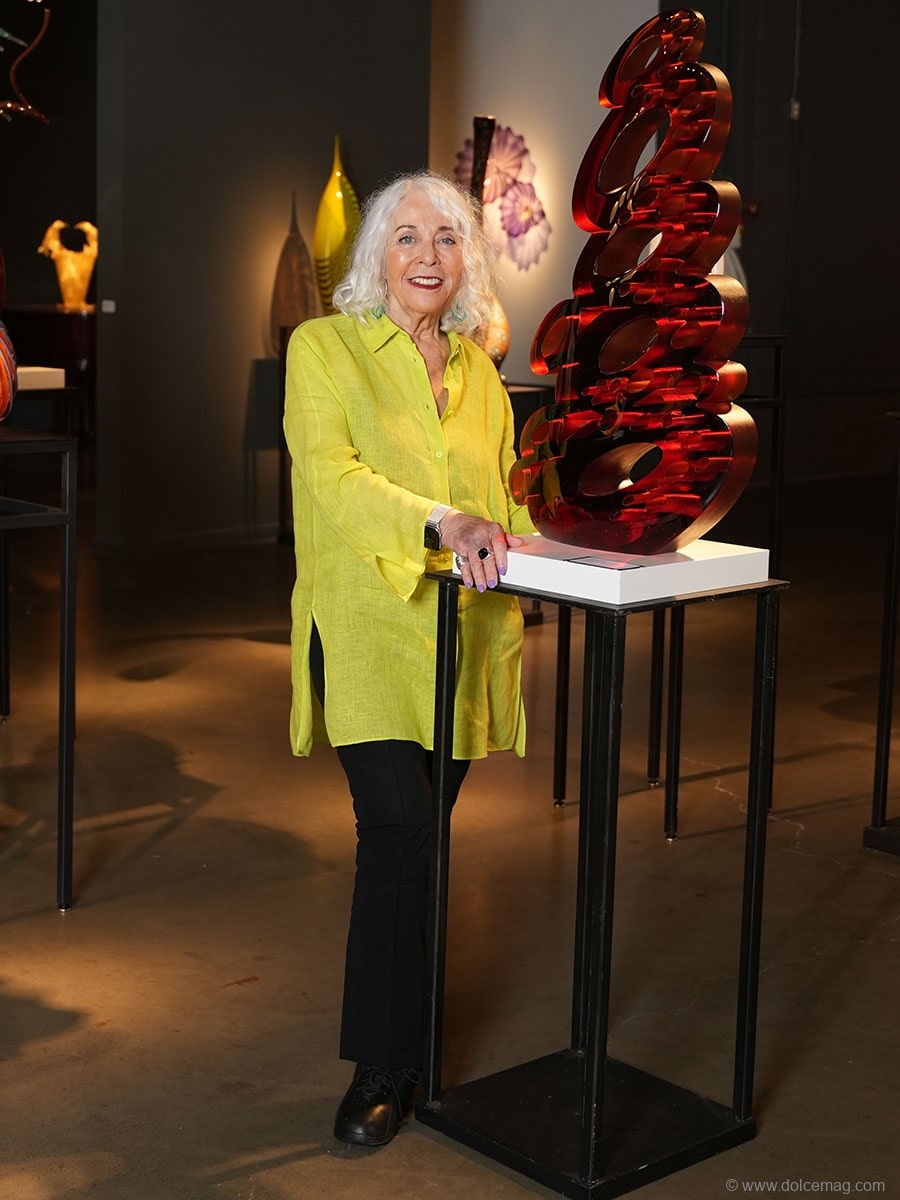
Sandra Ainsley highlights two renowned artists whose craft continues to provoke us to be more deeply appreciative and conscious of our human impact on our surroundings.
Jim Schantz Interview
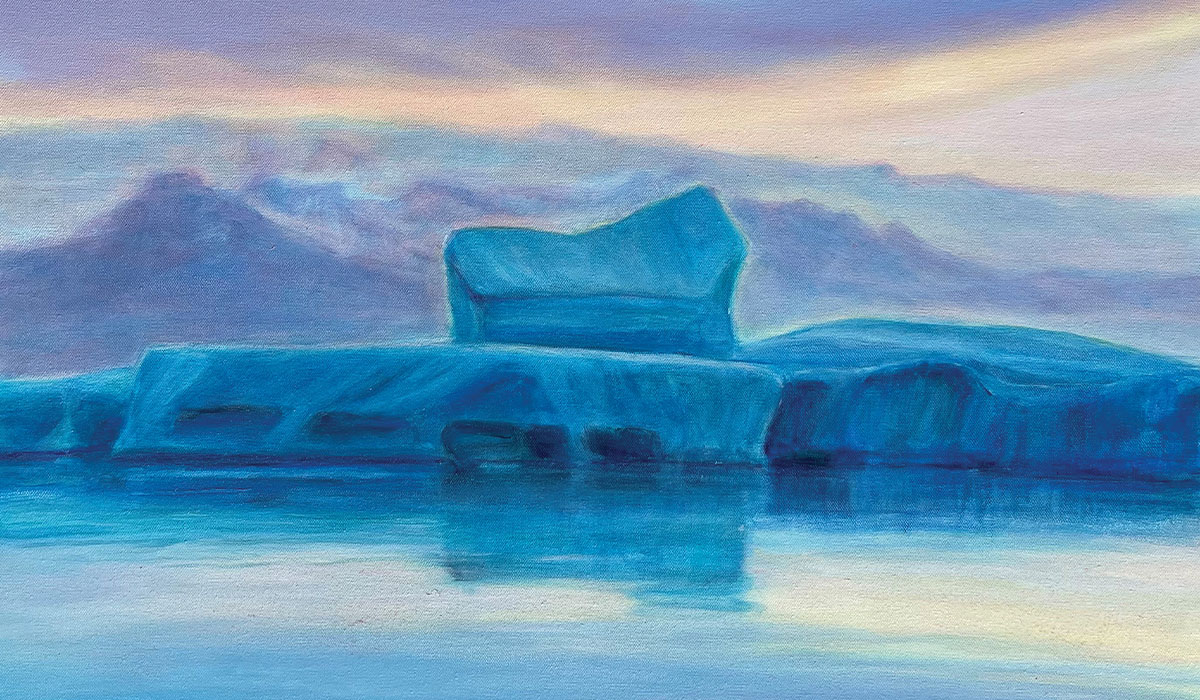
Q: Your glacier paintings often capture both the beauty and fragility of these landscapes. How do you balance aesthetic representation with environmental commentary?
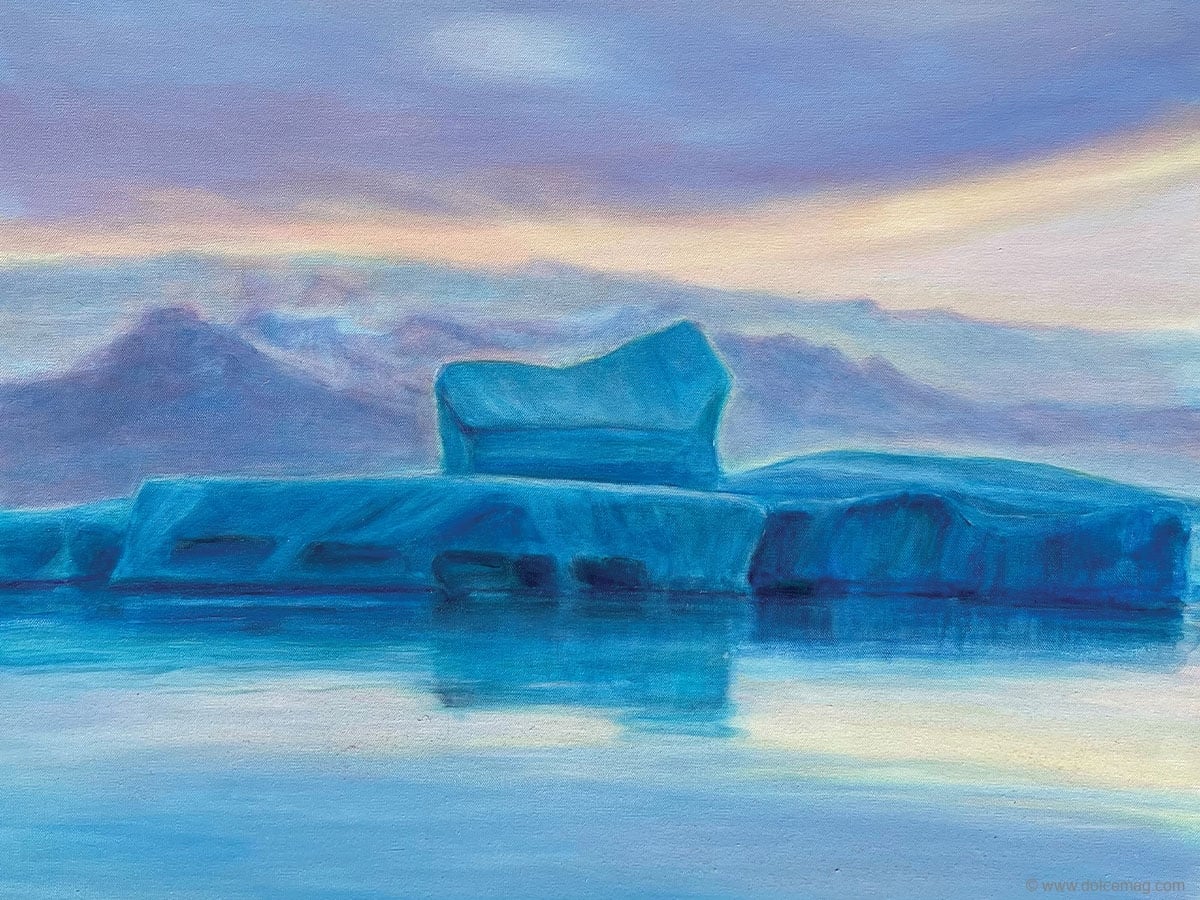
A: What fascinated me were the compositional possibilities of the formations of the icebergs. The glacial lagoon offers a wealth of compositional and lighting relationships. The fact that these forms are temporal also has significance. I see the icebergs as metaphors for the larger change taking place due to climate change. They are products of the glacier itself gradually melting and disappearing. Vatnajökull is predicted to be half the volume it is today in 75 years. I’ve always felt a connection to the purity of winter imagery in my landscape painting. The icebergs represent strength, endurance and transformation. These are aspects that have emerged from creating this series.
Q: Can you describe your process when painting glaciers? Do you work from photographs, memory or direct observation?
A: While in Iceland, I did some small watercolour studies. The paintings and pastels were created in my studio in the Berkshires in western Massachusetts. I use a series of reference photographs to initiate the work and bring me back to a specific place and moment. Eventually, I let go of the reference and work from memory, where the painting takes on a life of its own. Ultimately, I want to be completely present in that place, capturing the emotional experience.
Peter Bremers Interview
Q: Peter, your work is known and recognized internationally. How did you begin your career in glass?
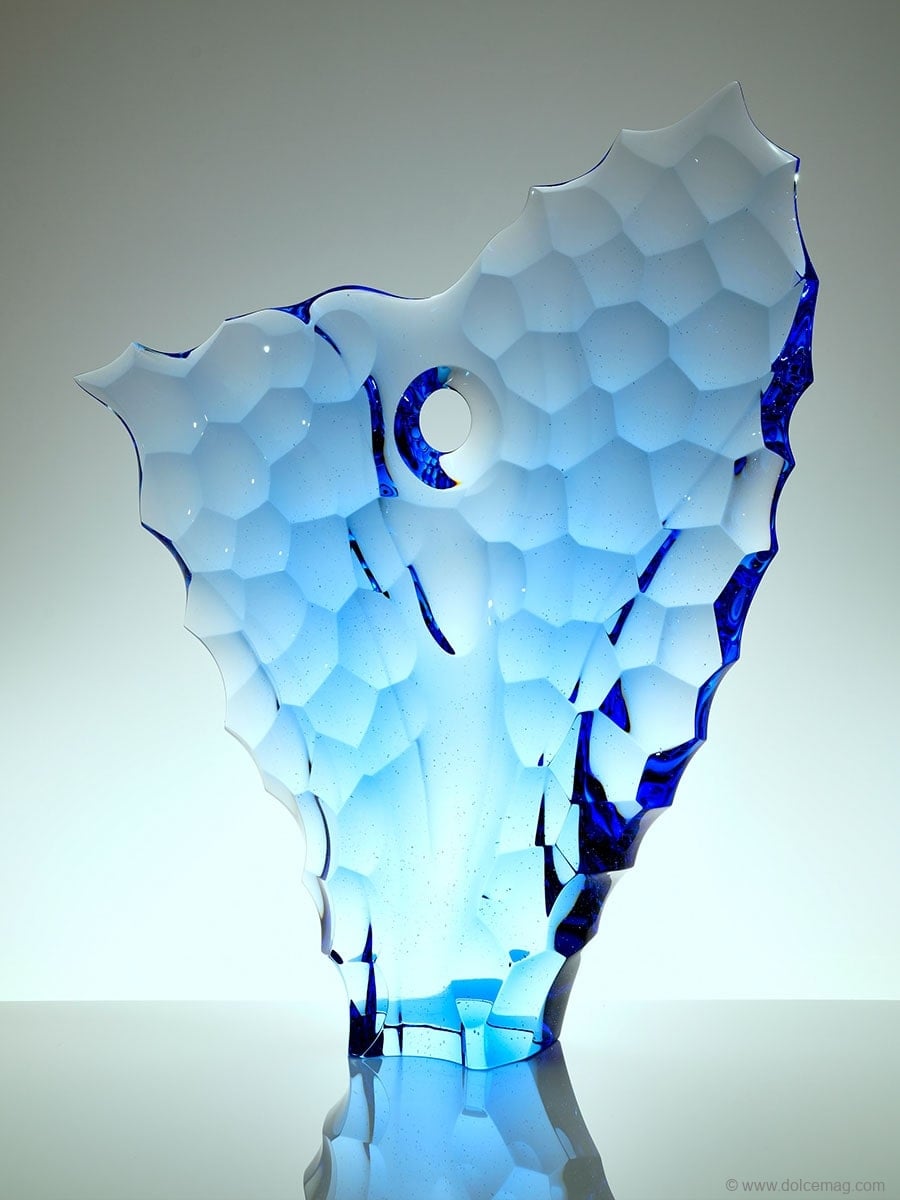
A: As a sculptor making light objects, including lenses and prisms from acrylic, being introduced to glassblowing opened completely new possibilities for me. This sexy, magical material has everything to do with light — transparent or translucent! It reflects, deforms and projects light through its intricate qualities. But at the same time, once heated, it can be deformed, blown, bent or even cast without losing any of those qualities. It is a material that allows me to translate my ideas, thoughts and emotions. I am still learning about the best expressive use of it. It’s a material that never loses its attraction as it has so many possibilities. It certainly has its restrictions, too, but understanding it more and more, it keeps opening new doors to be explored.
Q: What impact do you hope your sculpture will have on the viewer?
A: Art can reveal the unspoken, to inspire, comfort and provoke. It can lay bare what is diffused. It tells stories and can touch the viewer emotionally or intellectually. Art is a form of communication. Any response, the viewer’s interpretation, is a continuation of the creative process started by the artist. I try to create things of beauty. As the author Rollo May once wrote, “It is within beauty that we can feel the pulse of mankind.”
INTERVIEWS BY SANDRA AINSLEY