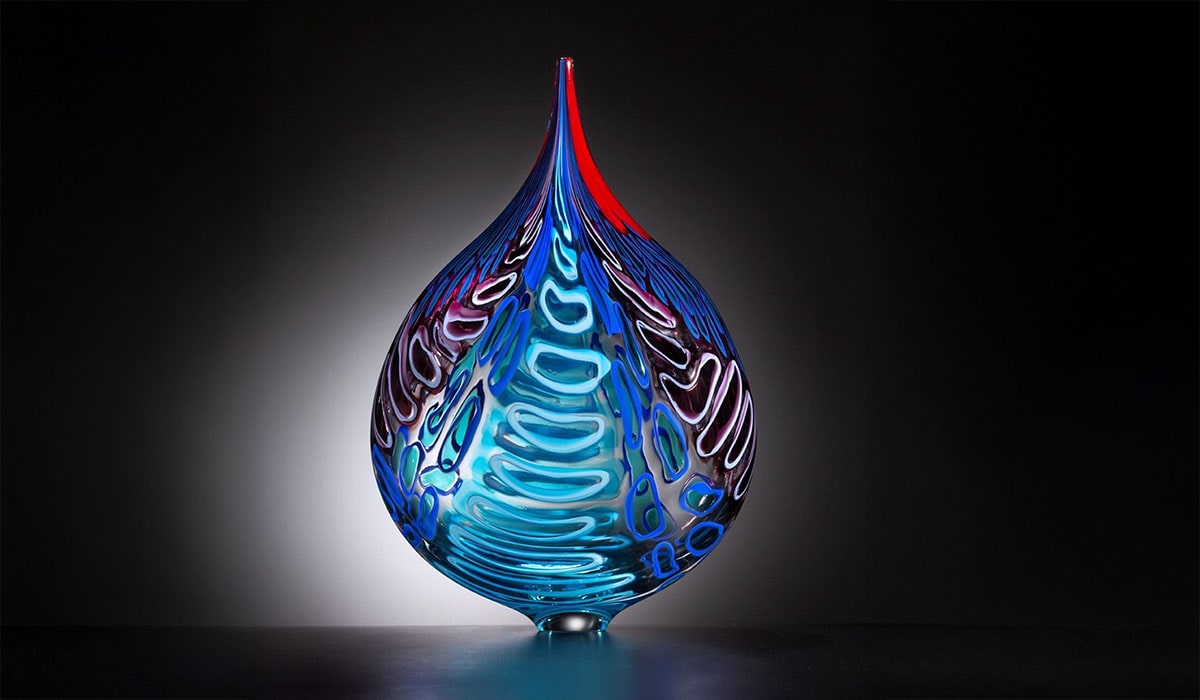
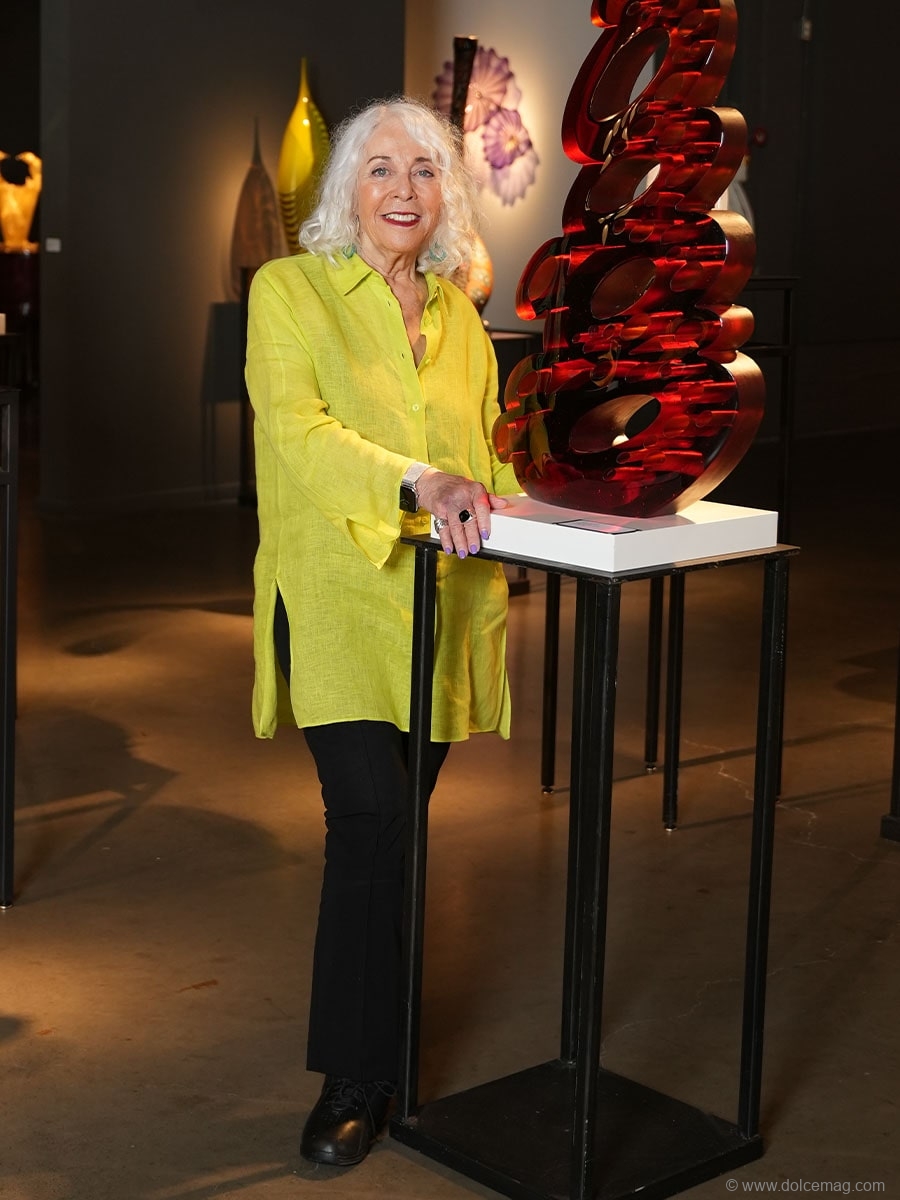
Sandra Ainsley conducts an exclusive interview with Murano, Italy’s Lino Tagliapietra, recognized as THE glass artist who inspired so many artists in the glass world today.
Q: You began your journey in glass at just 11 years old. What drew you to this craft so early?
A: I was born on Murano, so glass was all around me — in the air, the water, everywhere. I started working as a boy in the furnaces to help my family, and that hands-on experience gave me a deep connection to the craft. By the time I was 12, I was already learning directly from Maestro Archimede Seguso. From that moment, I knew glass would be my life.
Q: You earned the title of Maestro at 21. What did that recognition mean to you?
A: Becoming a maestro was a huge honour for me. In Murano, it’s not just about skill; it’s about responsibility. I felt entrusted with centuries of tradition and with passing that knowledge on. At 21, it was exciting but also a bit daunting, knowing that I had to uphold the legacy of Murano glass.
Q: Your work blends Venetian tradition with modern innovation. How do you approach this fusion?
A: I deeply respect tradition, but I don’t want to be bound by it. My work is a dialogue between the past and the present. I use ancient techniques like filigrana and zanfirico, but I also experiment and push the boundaries. I let the glass guide me, and that’s when the magic happens.
Q: You’ve had a significant influence on the American studio glass movement. How did that collaboration begin?
A: I first visited Seattle in the late 1970s and met Dale Chihuly. We exchanged ideas, shared techniques, and inspired each other. That experience opened my eyes to new ways of working and thinking about glass. It was a true collaboration, and it helped me grow as an artist while connecting Murano to the world.
Q: You’ve worked with various institutions and artists worldwide. What has been the most rewarding aspect of these collaborations?
A: I love the exchange of ideas. Every time I collaborate, whether with a museum, a fellow artist, or a student, I learn something new. Working together pushes me to grow — to try things I might not have attempted alone.
Q: Looking ahead, what do you hope for the future of Murano’s glassmaking tradition?
A: Murano has a rich and deep tradition, but I see the challenges young glassmakers face today. I hope they embrace the craft, innovate, and keep it alive. The future of Murano glass depends on passion, dedication, and a willingness to evolve while honouring the past.
INTERVIEW BY SANDRA AINSLEY