
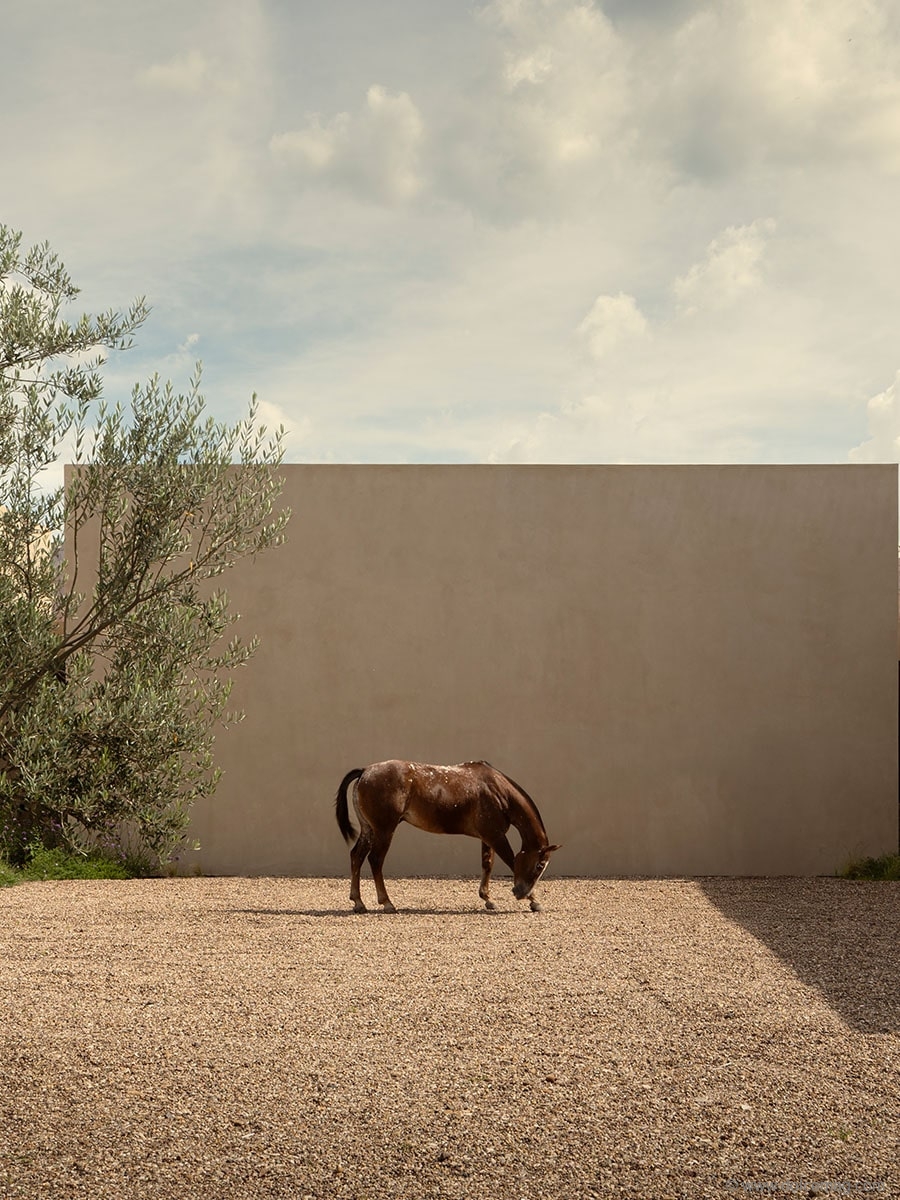
The Casa San Francisco Project celebrates simplicity and emotional architecture through the concept of time.
Luis Barragán’s artistic philosophy emphasizes the creation of spaces that evoke emotion and foster a connection to personal memory. The Casa San Francisco project in Mexico is a true testament to this unique ideology.
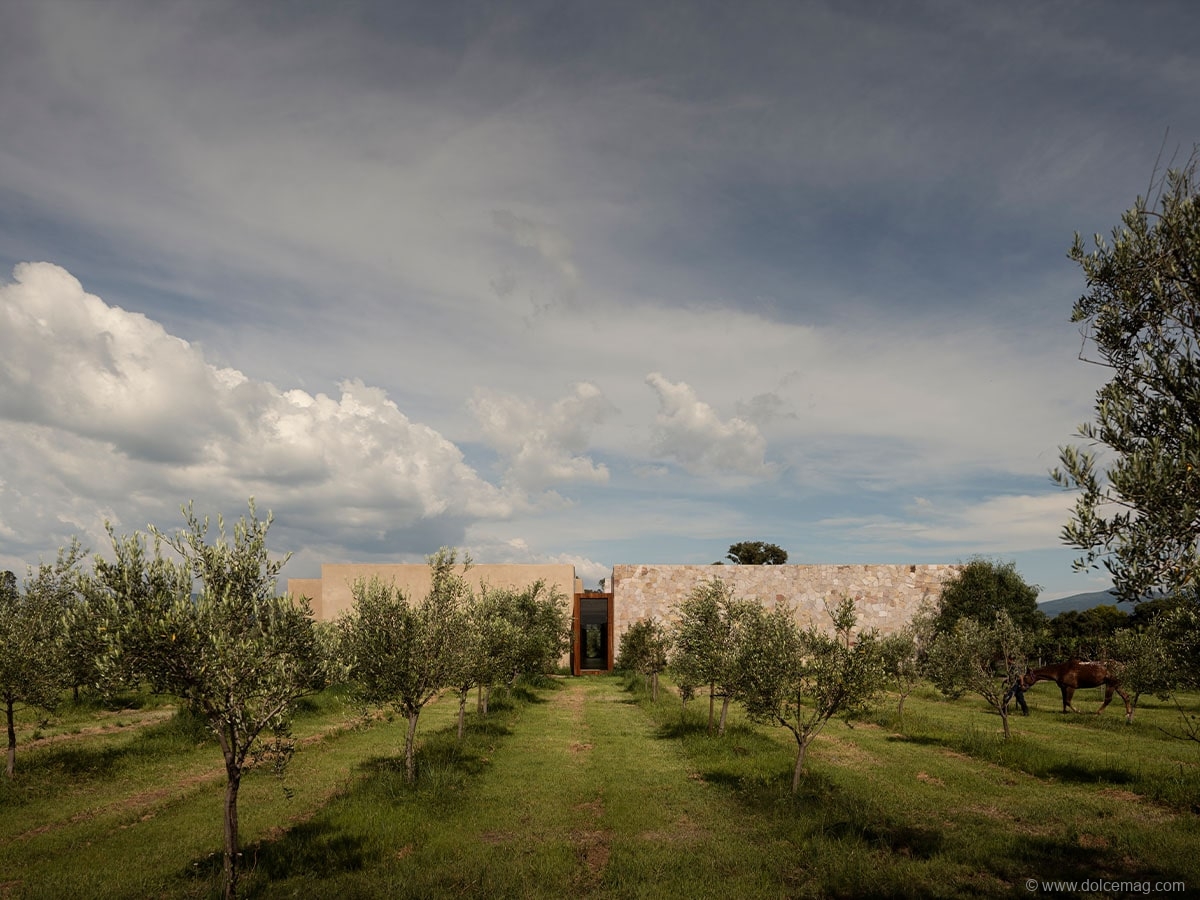
The project that began as a request for a holiday house in a vineyard outside of San Miguel de Allende has now emerged as a splendid amalgamation of winemaking and convent architecture.
The Jorge Garibay Arquitectos team, known for cultivating a close relationship with each project’s people, their identity, needs, and constraints, as well as their location, has successfully followed this credo with the Casa San Francisco Project as well.
Another idea the project embodies is finding beauty in imperfections. The project emphasizes the emotional depth that spaces contain and how this depth is augmented with the passage of time.
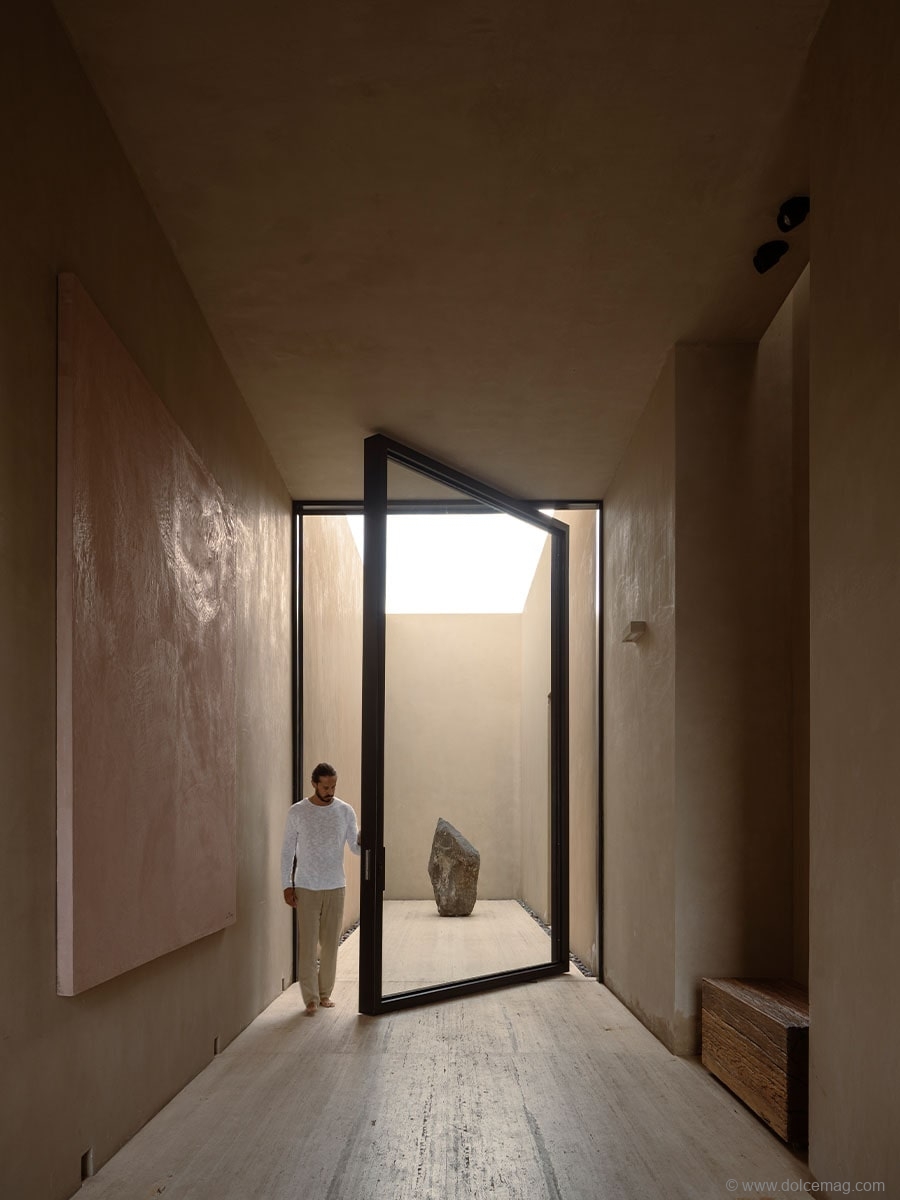
Celebrating a simple approach, oak furniture has been chosen for the interior while the lighting design mimics the light ambience found in 16th-century convents without compromising brightness levels. This mix produces cozy spaces where natural light is also crucial.
Situated on the outskirts of San Miguel de Allende, a small colonial city in the Mexican state of Guanajuato, the incredible location adds to the project’s excellence.
The establishment of San Miguel de Allende, formerly known as San Miguel el Grande, dates back to the 16th century, coinciding with the era when Franciscan friars brought grape-growing to Mexico.
The missionaries’ huge undertaking of spreading Catholicism throughout Mexico at this time also had an impact on colonial city planning and building, especially on the architecture of monasteries and convents.
Another crucial theme of this project is “terroir,” as in winemaking. Terroir refers to how a wine’s distinctive qualities, such as its structure, flavour, and aroma, are influenced by both human and environmental variables, such as cultivation techniques and climate, soil, and altitude.
In the same way, the new setting had an impact the architectural style used to provide refuge and spaces for instruction for religious travellers from across the Atlantic. This style was a response to Mediterranean architectural practices that were completely unrelated to the architecture of Mexico before Cortez’s conquest.
In order to create distinctive outcomes, viticulture and architecture that were brought to Mexico in the 16th century were planted in new areas. The project beautifully captures the intricacies of their history and growth.
While architecture and winemaking correspond to two aspects of the project, the surrounding landscape and the property’s function as a rest and leisure location come as the third element considered in the design of the Casa San Francisco.
In addition to celebrating the seasonal processes of growth, change, decay, and entropy, the intention was to establish an environment that would foster contemplation of the world’s natural order.
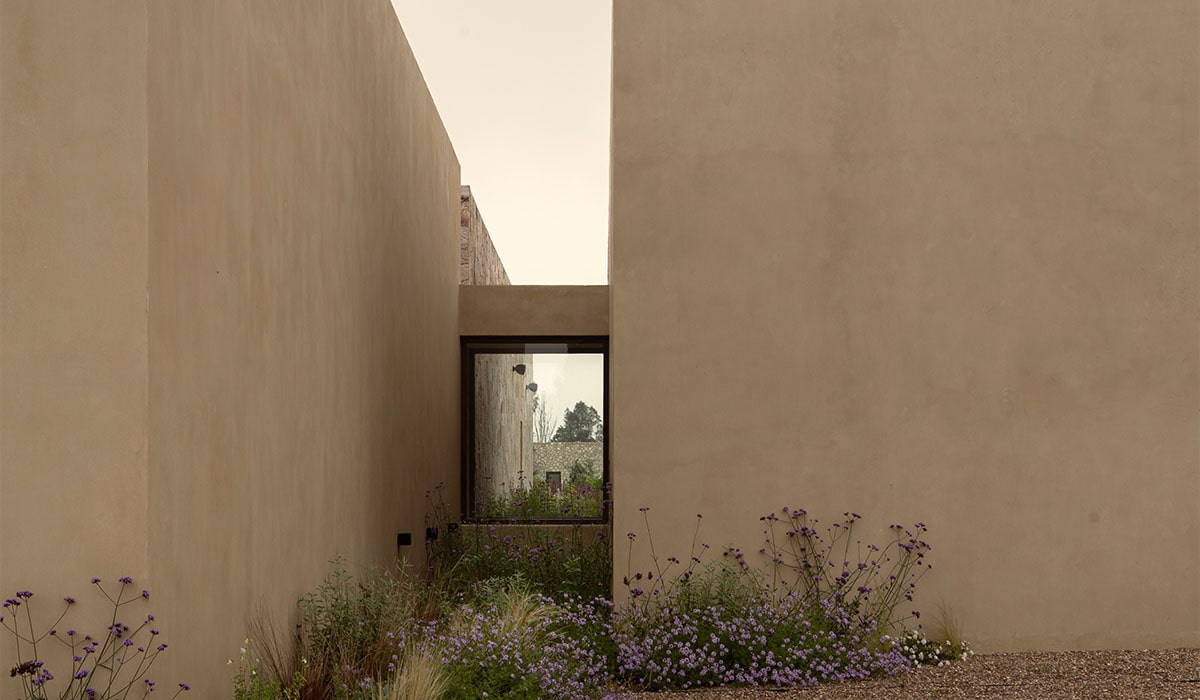
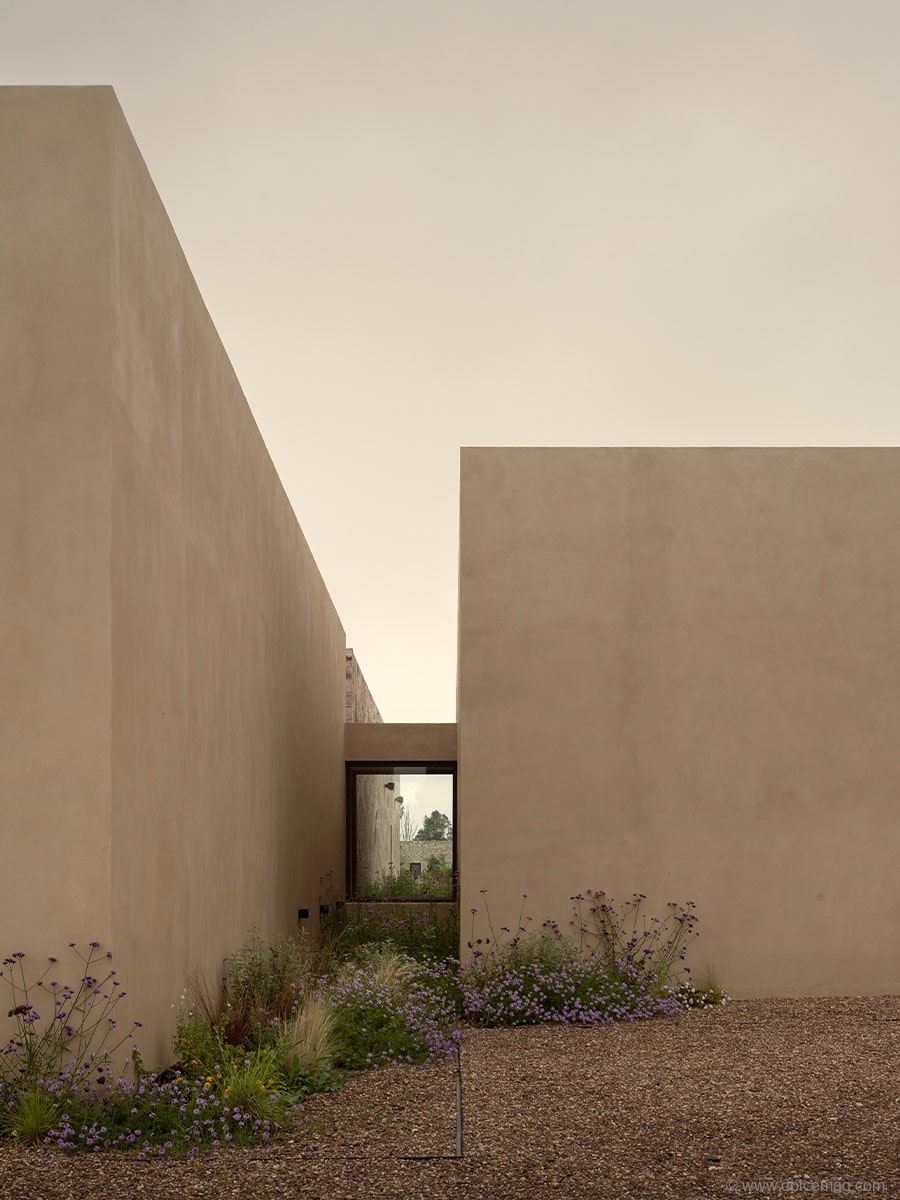
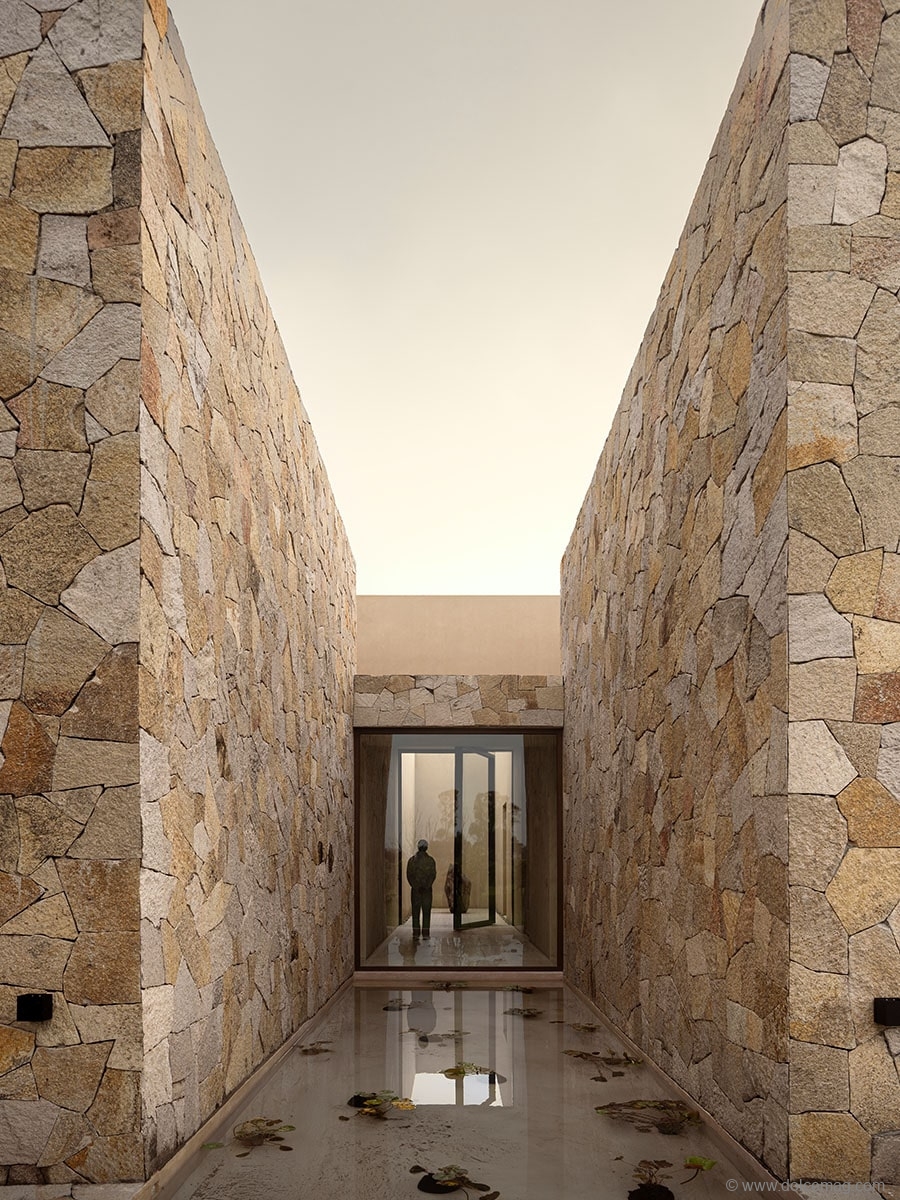
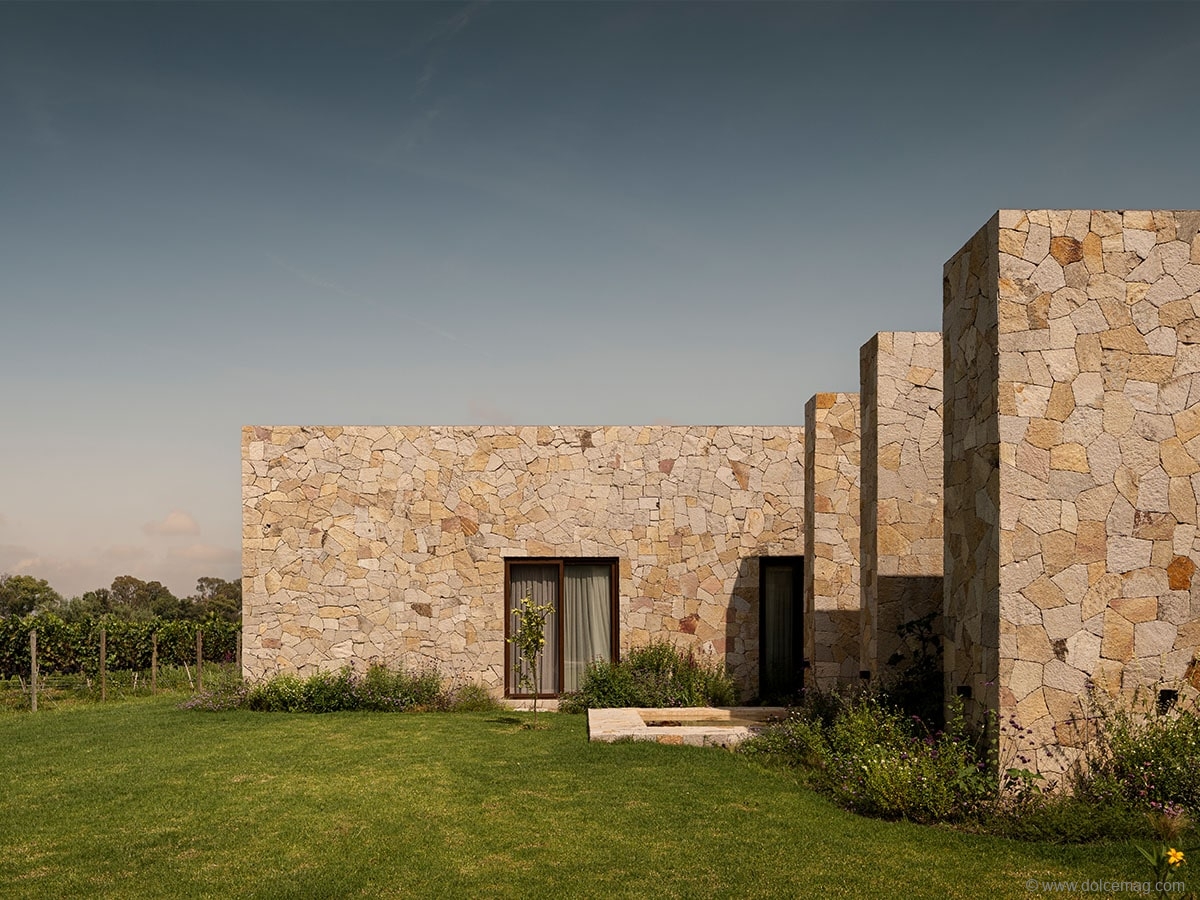
This was accomplished by dividing the house’s spaces into five volumes that open to various landscaped areas, providing unobstructed views of the surrounding natural setting and the vineyards.
The spaces are arranged around a transverse corridor that passes through the volumes. An entrance with a double-height ceiling that acts as a transitional area between the exterior and interior leads to the corridor. The public area of the house is located in the west wing.
The primary areas include the kitchen, living room, dining room, patio, garage and service areas. Four private bedrooms are located in the eastern part of the building.
Simplicity stands at the centre of the project’s philosophy. By choosing to use a minimal number of materials and a conventional architectural style translated into a contemporary language, the design beautifully conveys the concept of nature traversed by time.
The Jorge Garibay Arquitectos team’s vision has been brought to life with the Casa San Francisco Project. They constantly strive to achieve the best possible outcome, combining the requirements of the project with what is possible. The firm never undervalues the impact of emotional architecture and simplicity.
Durable, classic high-quality materials and traditional building techniques have been used throughout the house, giving it a sober form and colour.
The main components are unpolished Mexican marble for the floors, locally sourced stone and hand-applied lime-based paint that has been matched to the natural hue of the stone to create monochromatic monoliths.
Through a combination of these many factors and distinct design philosophies, the project has captured the historical truth of a small yet magical colonial neighbourhood in this Mexican city.
The Casa San Francisco Project is undoubtedly a true celebration of the philosophy of time defined by utmost simplicity and emotional relevance.