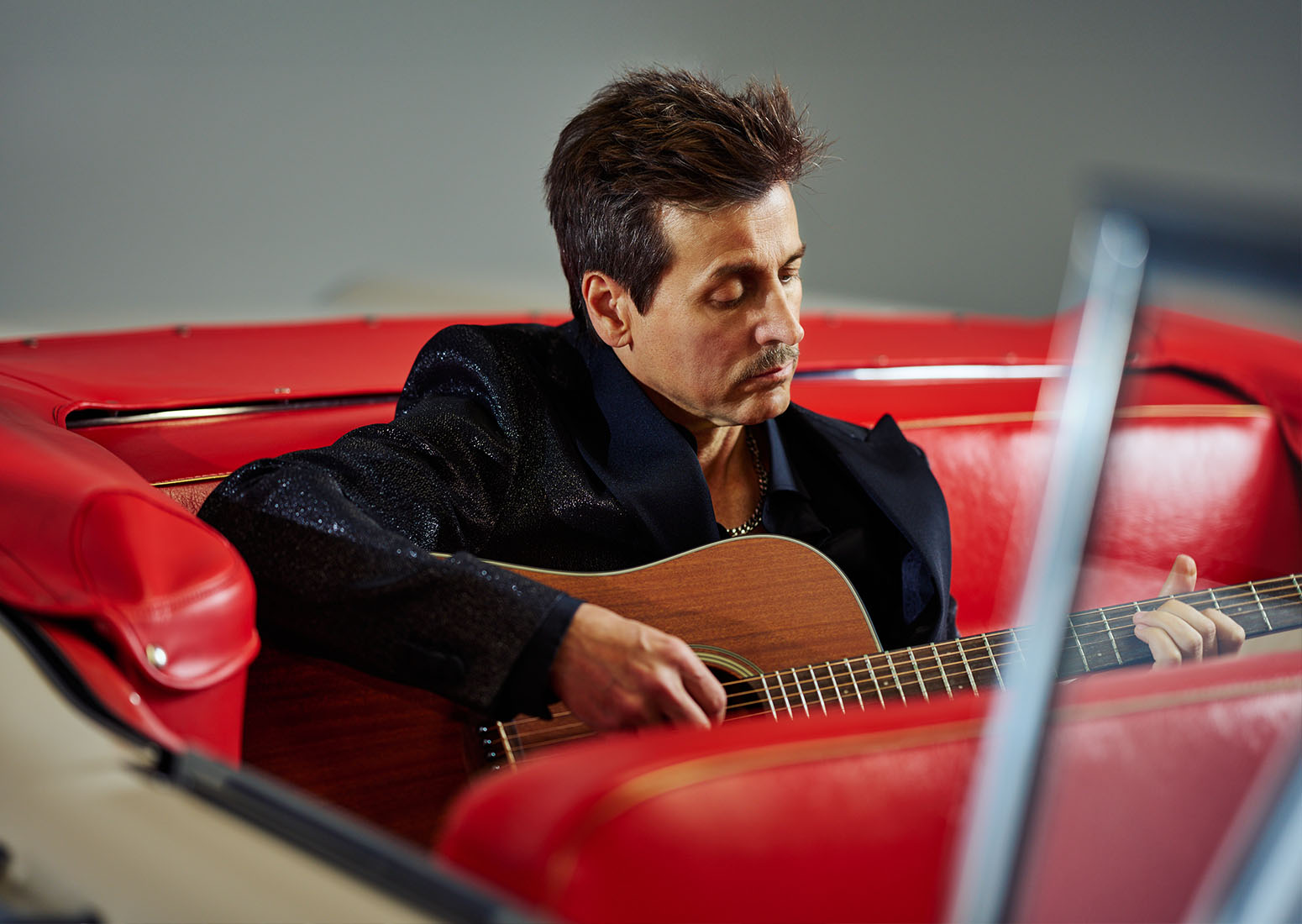
Raine Maida on music as religion, raising boys, and why War Child means everything.
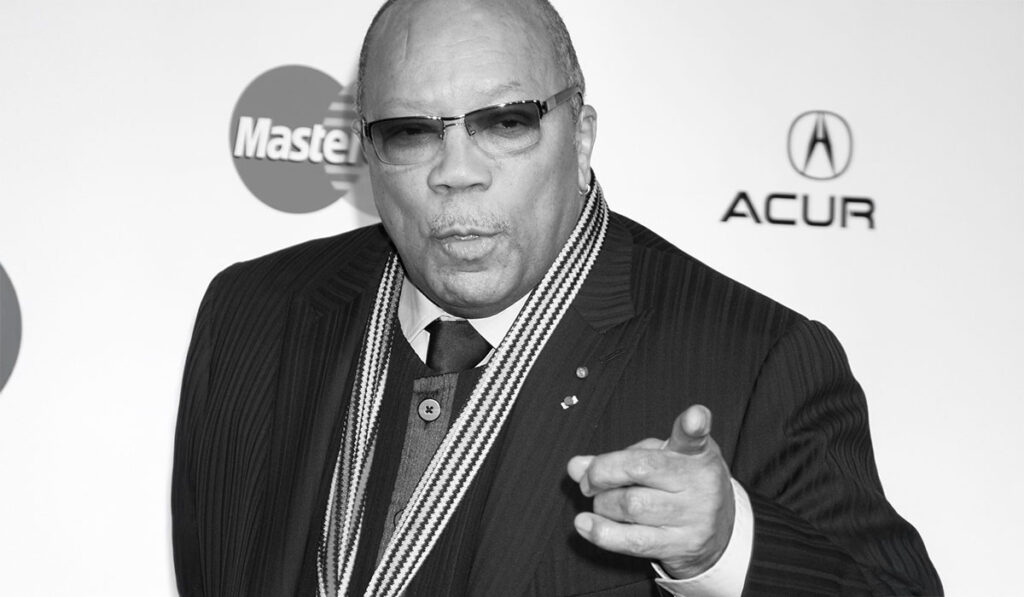
There is a particular kind of clarity that comes with time. Raine Maida, the voice behind one of Canada’s most beloved rock bands, Our Lady Peace, has had three decades to find his. In conversation on a cool Toronto morning, the Etobicoke native is reflective, warm, and disarmingly honest about the arc of his life from a kid listening to U2 and Neil Young alone in a boarding-school dormitory to a husband, father of three, humanitarian, entrepreneur, and still — emphatically — a musician with something to say.
It started with loneliness and lyrics. “I went away to a boarding school and I didn’t love it at first,” he recalls. “Music was kind of like my religion — it saved me. At night, I would put on CDs and literally stay up all night listening to them.” He explains how the messages in his favourite artists’ lyrics fed an early hunger for meaning in words.
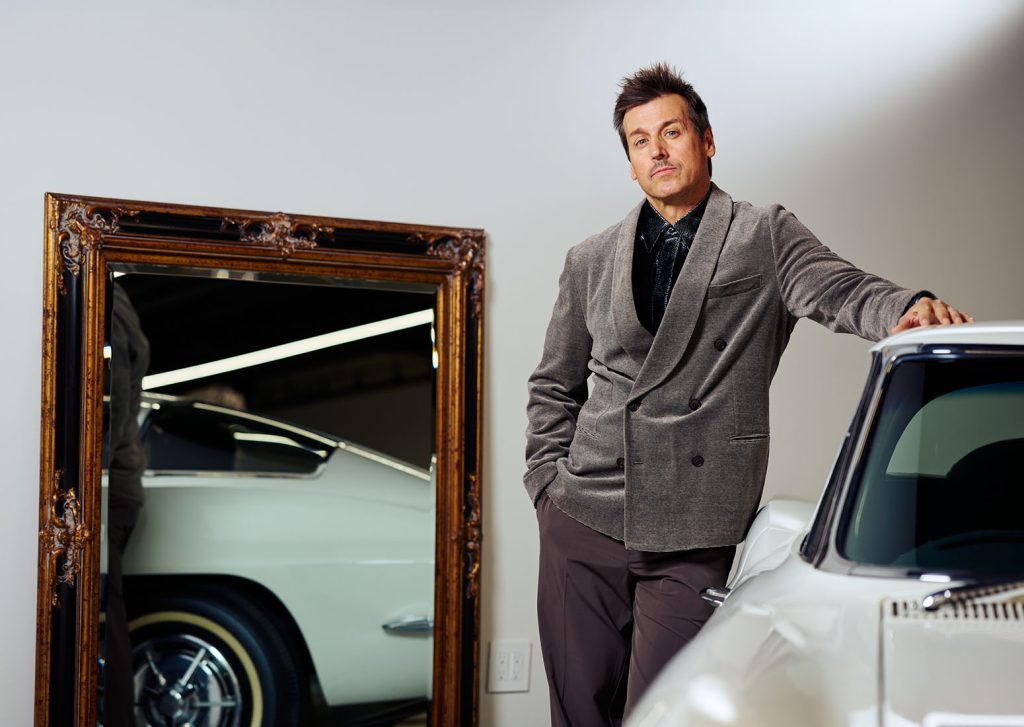
Now, after more than 25 years fronting Our Lady Peace, Maida is preparing to hit the road again, this time on a joint North American tour alongside his wife, singer-songwriter Chantal Kreviazuk. Their pairing feels both natural and hard-won. The two met in a Sony Music box at Toronto’s Scotiabank Arena at a Pearl Jam concert, while Maida was deep in the recording of Our Lady Peace’s landmark 1997 album, Clumsy. “I fell in love with her right there, that instant,” he says, his voice softening. “We talked the whole concert — I didn’t even see the concert. I don’t even remember what songs they played.”
Kreviazuk and Maida have been together 28 years now, married for 25. Together, they’re finishing a new album and co-authoring a book that’s part memoir, part meditation on creativity and partnership. “You have to be creative to keep a relationship going,” Maida says with a laugh. “And you have to be creative as a family to raise kids. It’s crazy.” The couple have three sons, and it’s fatherhood, he says, that changed his music more profoundly than anything else. “I realized that my kids are going to judge me by my music more than me giving them speeches or advice at the kitchen table. So, all of a sudden, the music I was making was for them specifically.”
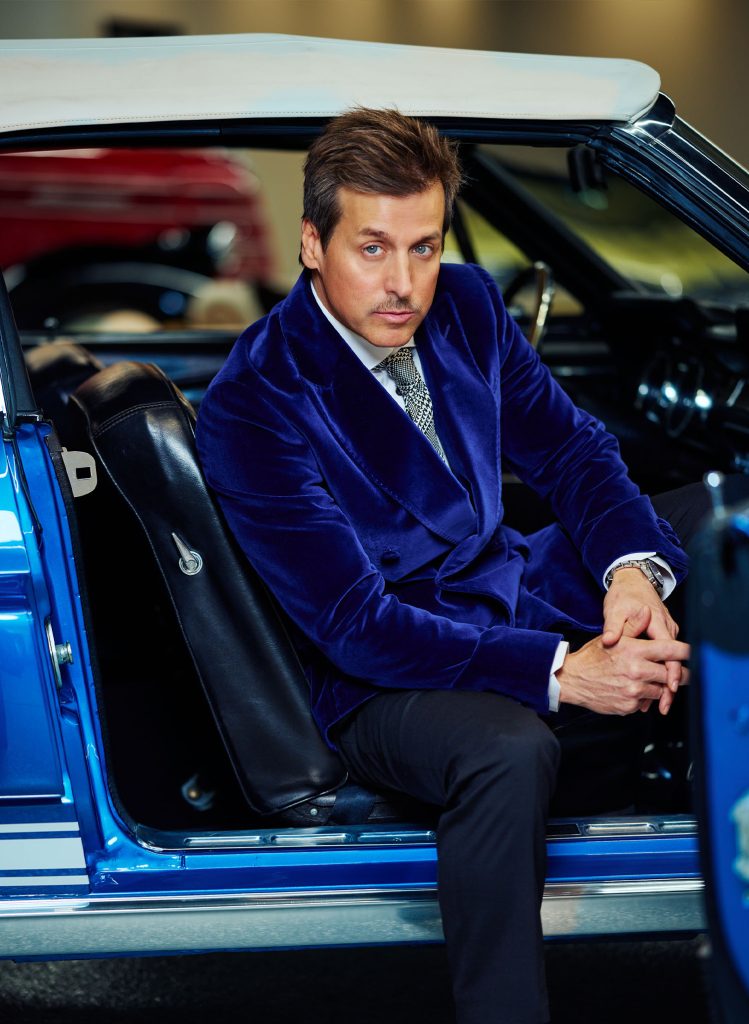
He describes watching his boys with the eyes of a philosopher. “A kid walks out the front door and he sees dinosaurs and clouds,” he says. “I walk out and I see I’ve got to take the garbage out, got to mow the lawn, my dog pooped on the driveway. The trick is trying to hold onto that child’s innate creative, aspirational way of walking into each day.” His boys, he says, help preserve that quality in himself, and it has shaped the longevity of Our Lady Peace.
The band’s upcoming U.S. tour is already sold out. Their Canadian run last year also sold out. “I go on stage every night now with gratitude,” Maida says. “It’s like a marriage — staying together for 25 years” with the fans, he says, and he’s started letting fans in more during shows, telling stories and sharing intimate moments. “They’re getting something really special.”
Yet music is only part of his story. For two decades, Maida has been one of the most devoted advocates for War Child Canada, the organization founded by Dr. Samantha Nutt that delivers education and support to children in conflict zones. He has travelled to Afghanistan, Iraq and other war-torn regions, witnessing first-hand the scale of what children endure and the resilience they still manage to possess. In 2025, he was honoured with the organization’s Founder’s Award. He is quick to reframe the recognition. “War Child has done more for me than I’ve done for them,” he says. “Being able to go on those trips has been a gift to help me understand the goodness in people.” He remembers sitting in a computer science class just outside of Kabul with young Afghan men pursuing informal education past Grade 6, the limit imposed on boys by the Taliban. He saw kids in Nikes and Stussy, and remembers how one of them won a design contest for Australia’s Qantas Airlines from his bedroom. “I thought that could be my son,” Maida says quietly. The Founder’s Award recognition “isn’t about me. It’s a statement that the work needs to continue.”
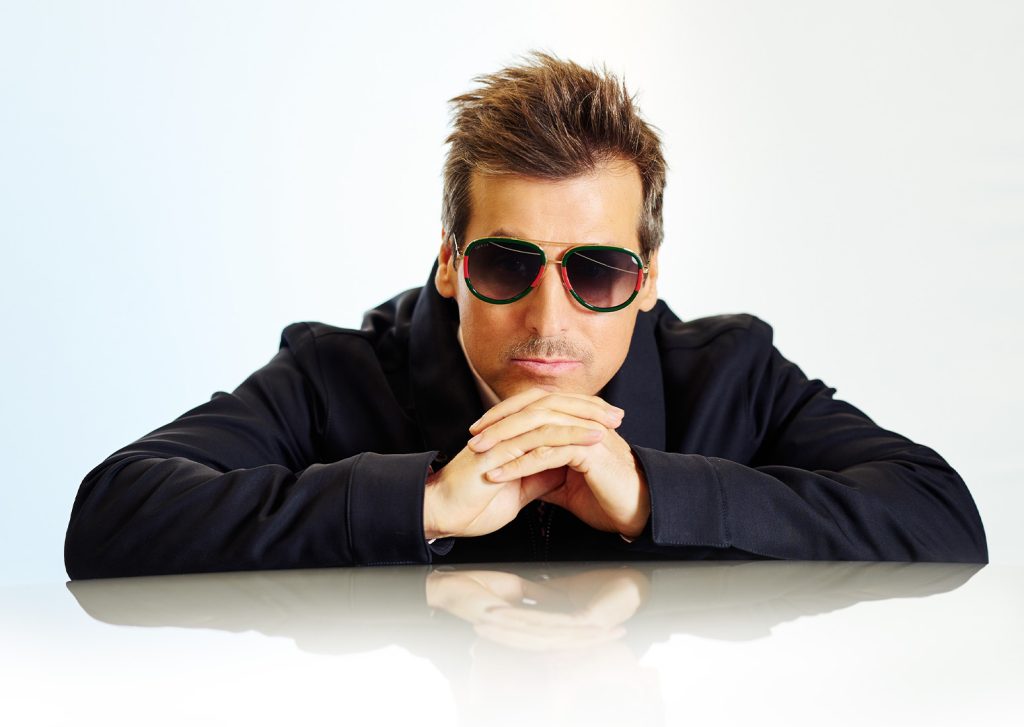
“In the Midst of All the Noise and Everything Going on, Trying to Find That Sweet Simplicity is a Huge Goal for Me.”
When asked about his musical, humanitarian and family legacy — what he wants to leave behind — he pauses. The answer, when it comes, is simpler than you might expect from a man with so much cumulative impact. “I just want my kids to know that I showed up,” he says. “It sounds stupid and simple. But showing up as a father is the most basic but courageous thing you can do.”
With time, Maida has come to see that the simplest things in life are often the most powerful. On a recent trip to Italy, he felt profound contentment from the simplest things — visiting his father’s birthplace in a small village in Calabria, sharing a meal with cousins he barely knew, visiting his grandmother’s grave. “In the midst of all the noise and everything going on, trying to find that sweet simplicity is a huge goal for me.”
For a man who has spent his adult life searching for meaning — in words, in melody, in conflict zones, in his sons’ faces — it turns out the answer often looks a lot like home.