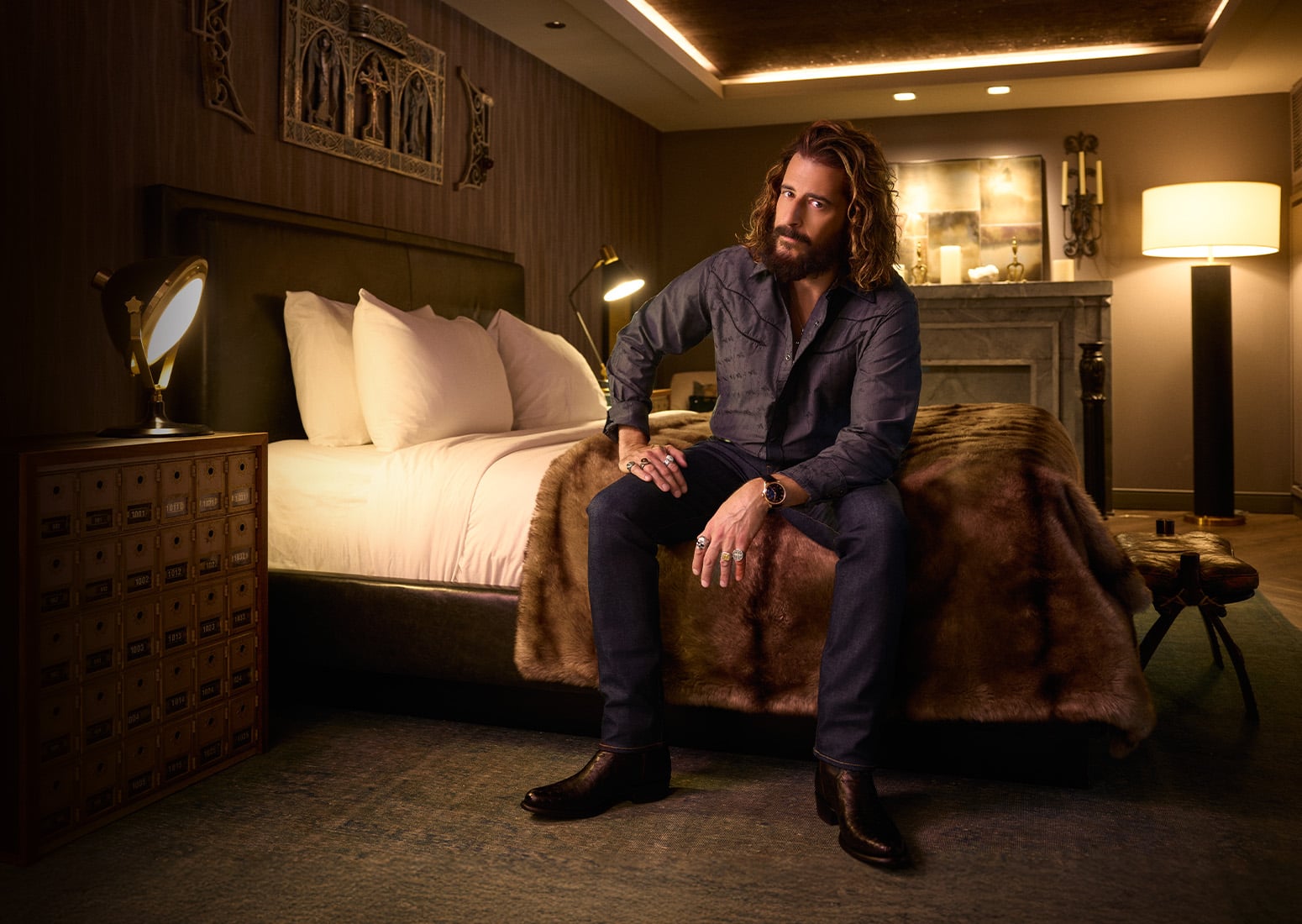
Jonathan Roumie got his big break playing Jesus in the series The Chosen, currently streaming on Amazon Prime Video, but his journey to stardom was far from easy.
Jesus is a drummer, recently seen in Nashville playing drums with different local bands. Shocked by the news, Dolce had no choice but to fly to Nashville to investigate.
It turns out it’s not actually Jesus, but Jonathan Roumie, the actor who plays Jesus in the TV series The Chosen. He gladly agreed to meet with us at the Hutton Hotel in downtown Nashville to clear up the misunderstanding.
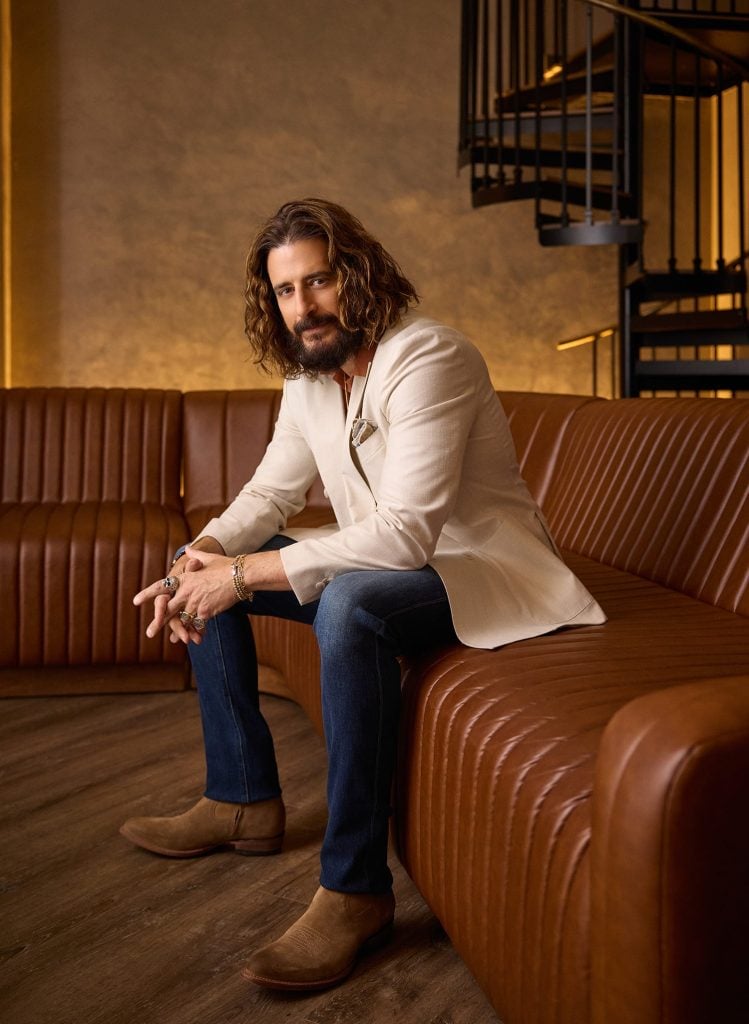
Roumie, with his long brown hair and beard, definitely looks the part. He’s become one of the most recognizable figures in modern spiritual entertainment, yet in person he speaks less like a celebrity than a reflective artist still trying to understand the strange path that brought him here. Thoughtful, funny, occasionally self- deprecating and deeply introspective, the actor carries with him the calm intensity of someone who has spent years searching for meaning before finding global recognition almost unexpectedly.
Long before millions of viewers around the world associated him with flowing robes and biblical landscapes, Roumie was simply a creative kid from a multicultural family trying to understand where he belonged. “Having a diverse family background is something that I think has been very, very unique to me growing up,” he says. Born in New York City to an Egyptian father and an Irish mother, Roumie grew up moving naturally between different cultures, traditions, and perspectives. Childhood trips to Ireland and later visits to Egypt gave him what he describes as “a worldly perspective on cultures and people outside of my community.” That dual heritage would eventually become one of the subtle but defining aspects of his career.
In a genre where Middle Eastern characters have historically been played with British and American accents, Roumie made a deliberate choice to bring something more authentic to the role that would come to define his life. “Why don’t I make him sound like he’s from the Middle East?” he remembers thinking when first portraying Jesus years before The Chosen existed. “I grew up with the accent on my dad’s side of the family,” he explains.
Before acting entered his life in any serious way, music was his first obsession. “My mother would tell me that from the time I was probably about 18 months, I was banging on pots and pans, like incessantly,” he says with a laugh. By the age of seven, his parents had bought him a drum set. By 11, he was taking formal lessons. Music quickly became the emotional backbone of his adolescence. He played in jazz bands, orchestras, concert bands, marching bands, and pit orchestras for school productions. “I was always playing music,” he says.
“It Would Be Unwise I Think, on a Spiritual Level, to Kind of Say No Three Times to God.”
After film school, Roumie entered the entertainment industry not as an actor but as a production assistant and location scout in New York. During that period, he continued playing music with friends, eventually recording an album and performing at legendary New York venues, including CBGB shortly before the iconic club closed. The irony still makes him smile: the former punk landmark eventually became a John Varvatos store, which Roumie now admits is one of his favourite clothing brands.
Music, however, proved difficult to sustain professionally. The record company behind his album went bankrupt, his collaborator stepped away to support his family, and Roumie shifted his energy toward film production work. Acting came later — and almost reluctantly.
“It would be unwise, I think, on a spiritual level, to kind of say no three times to God,” he says, referring to the progression from visual art to music to acting. The transition from behind-the-scenes crew member to performer was neither smooth nor glamorous. Roumie spent years balancing small acting opportunities while working practical industry jobs. When he eventually moved to Los Angeles in 2010, the reality of the profession hit hard. For nearly eight years, success remained elusive.
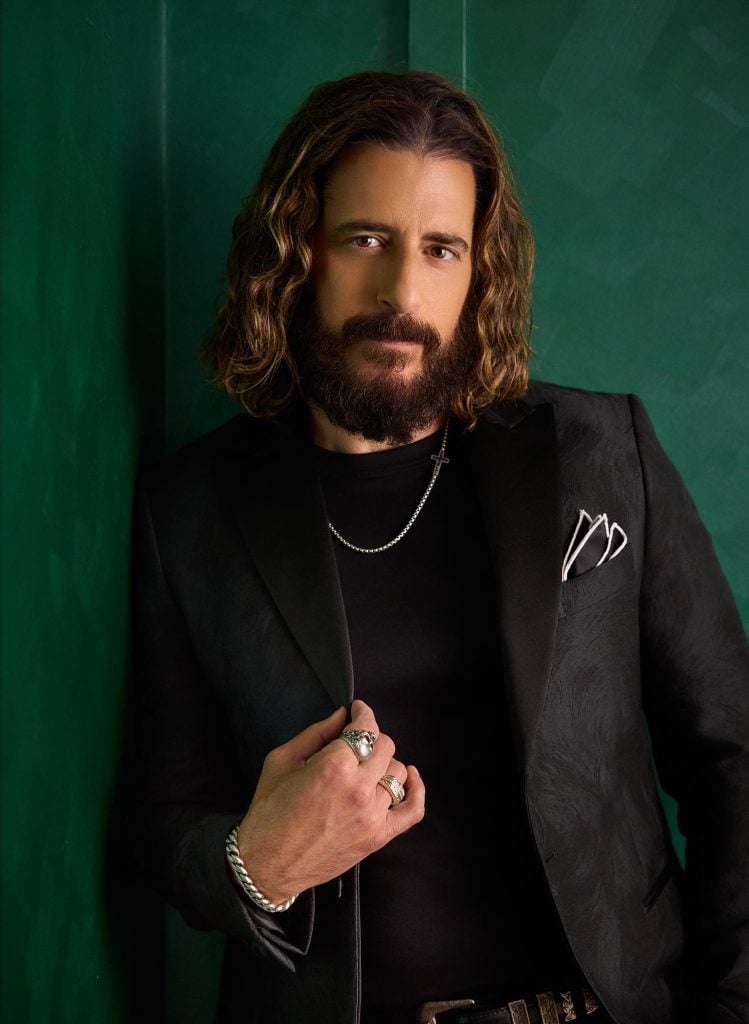
The Jonathan Roumie audiences see today — composed, internationally recognized, spiritually assured — was once an actor on the verge of giving up entirely. By 2018 he was financially devastated. “I was completely broke and out of food, even,” he recalls. “I didn’t know what I was going to do.”
The story that followed has become central not only to Roumie’s life but to the mythology surrounding his rise. One morning, overwhelmed by frustration and fear, he decided to surrender his carefully controlled vision of success. “I needed to trust that God had a plan for me, that He wouldn’t bring me all this way for so many years, giving me these kinds of artistic gifts and giving me work piecemeal, for it to not lead to something,” he says. Hours later, after having spent even his last dollar and returning home completely broke, he checked his mailbox and found four unexpected cheques waiting for him. “I had $1,100 by the time I opened up all those cheques,” he says. “I just wept.”
To Roumie, the moment represented more than financial relief. It became a spiritual turning point. “The thing that changed was my willingness to surrender,” he explains. “I haven’t worried about how I was going to make a living since that day.” Three months later, he was cast as Jesus in The Chosen.
At the time, nobody involved knew the series would become a global phenomenon. The production initially had funding for only four episodes. Roumie himself approached the opportunity with humility rather than ambition. “To me, it was everything,” he says. “I thought, ‘Well, I’m going to take what I’m given with these four episodes.’”
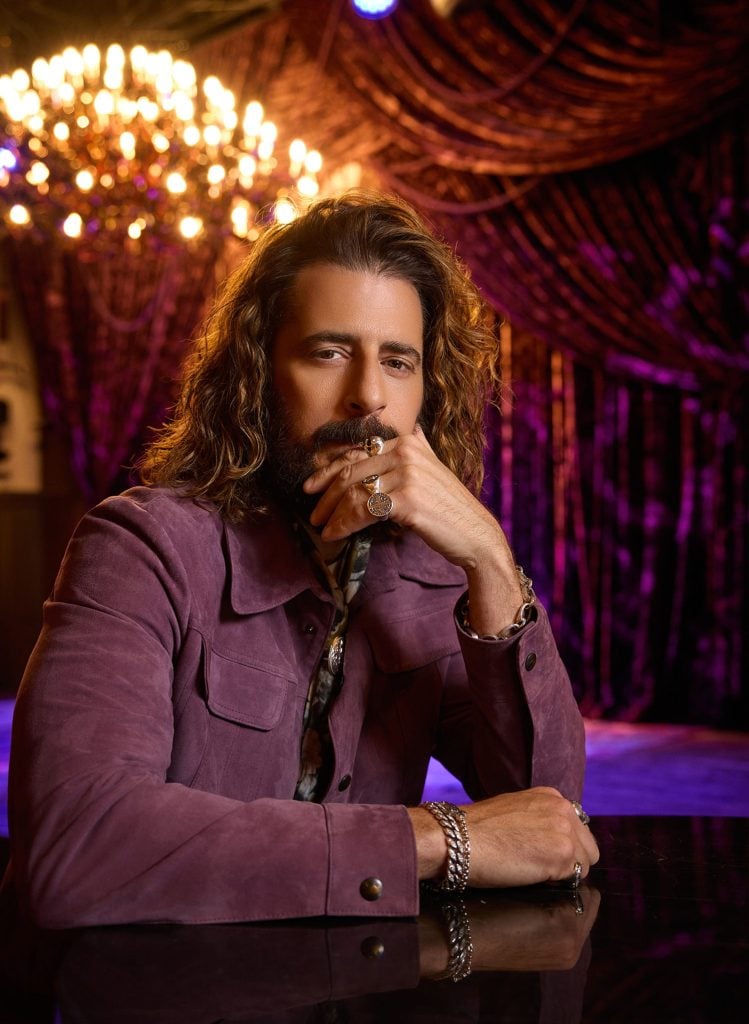
Seven seasons later, the show has transformed both his career and his life. The weight of portraying Christ on screen is something Roumie speaks about carefully, almost cautiously. There is gratitude in his voice, but also responsibility. “It’s humbling,” he says. “It’s a lot of weight to carry at times.”
That weight intensified dramatically during the filming of the crucifixion scenes for the upcoming sixth season, out this November. Roumie describes the experience not simply as physically demanding but psychologically destabilizing. Before filming began, he prayed for the ability to portray the suffering authentically. Shortly afterward, during production in Utah, he injured his shoulder. “I separated my AC joint,” he says. “And it was on the shoulder that I was going to be carrying the cross.”
For Roumie, the injury felt spiritually significant rather than coincidental. Throughout filming, he endured months of pain while attempting to psychologically inhabit the emotional and physical trauma of crucifixion. “You’re essentially creating trauma in real time,” he explains. “You’re experiencing trauma because you’re creating the trauma for it to feel authentic.”
Yet despite the gravity of his role, Roumie himself is not solemn in everyday life. During conversation he shifts easily between deep theological reflection and playful humour. Asked whether dating has become easier or harder after playing Jesus, he laughs. “I couldn’t tell you, because I’m not there yet.”
‘Success is Truly Experienced in the Surrender of Needing Success — Being Free of the Obligation to Succeed.”
‘ Jonathan’s comedic side isn’t something he developed recently. In fact, much of Roumie’s pre-Chosen acting career involved comedy roles. “Most of my résumé in L.A. was comedy,” he says. “French guys or Jesus. Maybe in the future, I’ll play a French Jesus!”
That comedic instinct recently resurfaced in Solo Mio, a lighter project opposite Kevin James. The contrast with The Chosen could hardly be sharper, and Roumie visibly enjoys talking about the freedom the role provided. “I didn’t have to carry the weight of the world on my shoulders, literally,” he jokes.
Solo Mio, he says, was designed as a “comfort movie” — warm, funny, emotionally generous. Its reception surprised even him. Singer Michael Bublé, himself a past Dolce cover star, praised the film online, calling it something people should experience repeatedly because it simply “made me feel so good.”
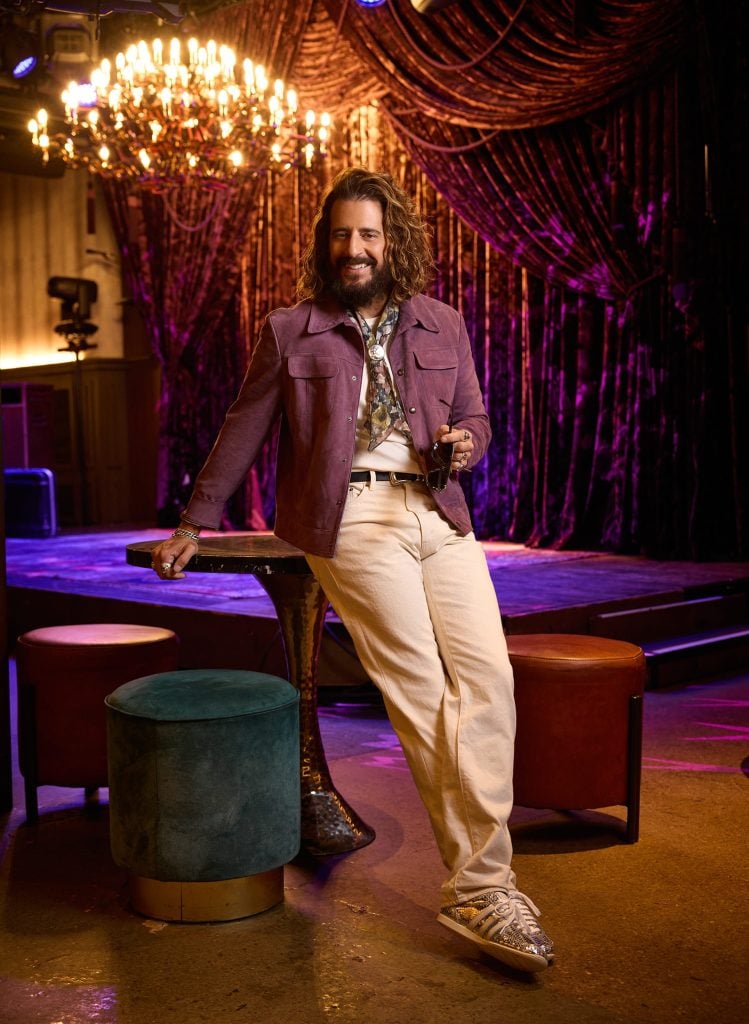
That idea — bringing light into culture without becoming preachy or simplistic — appears repeatedly throughout Roumie’s philosophy about art. “I would like to see more light in entertainment,” he says. “Good-quality, nuanced, sophisticated entertainment that speaks to people who want to see more light in the culture.”
The success of The Chosen has also exposed Roumie to the emotional intensity of modern fandom in ways he never anticipated. Some viewers approach him not simply as an actor, but almost as a spiritual intermediary. “Somewhere in the back of their heads,” he says carefully, “they’re secretly hoping that I could somehow cure them of something, or help them heal some deep, deep wound.”
He understands the longing behind those encounters, even if they make him uncomfortable. “The best I can do is give them a hug and pray with them,” he says.
Despite his fame, Roumie’s personal life remains pretty grounded. When he is not filming, he spends much of his time developing future television projects as a producer and creative collaborator. But increasingly, he also values stillness. “If I’m not working, I’m not trying to do anything,” he says. “I just try to sit on a beach, get some sun.”
That desire for peace seems connected to his broader understanding of success. For Roumie, success is no longer measured primarily through money, fame, or industry status. “Success is truly experienced in the surrender of needing success,” he says, “being free of the obligation to succeed.”
It is a perspective shaped by struggle, uncertainty, and the strange unpredictability of artistic life. Fame, he insists, is fragile. “All of it can go away,” he says. “The trappings of the material world are transitory. They’re fleeting.”
There is gratitude in his storytelling, but not complacency. Even after becoming one of the most recognizable actors in contemporary faith- based entertainment, he still speaks like someone who sees himself as a work in progress.
Asked what la dolce vita means to him, he doesn’t allude to luxury or fame, but something far simpler. “I think being free of anxiety about living in the world,” he says softly. “That’s a work in progress for everybody, but that would be pretty sweet.”
Rapid Fire
Q: What’s the fondest memory you have of growing up?
A: Probably being with my family at holidays, my extended families. I have, like, 40 cousins in the United States, anyway. And holidays were always big.
Q: If you had a last supper, what would it be?
A: It would certainly be lobster there, and lamb, and good red wine, and the ability for me to eat gluten-laden pasta, because I can’t really do that anymore unless I go to Italy.