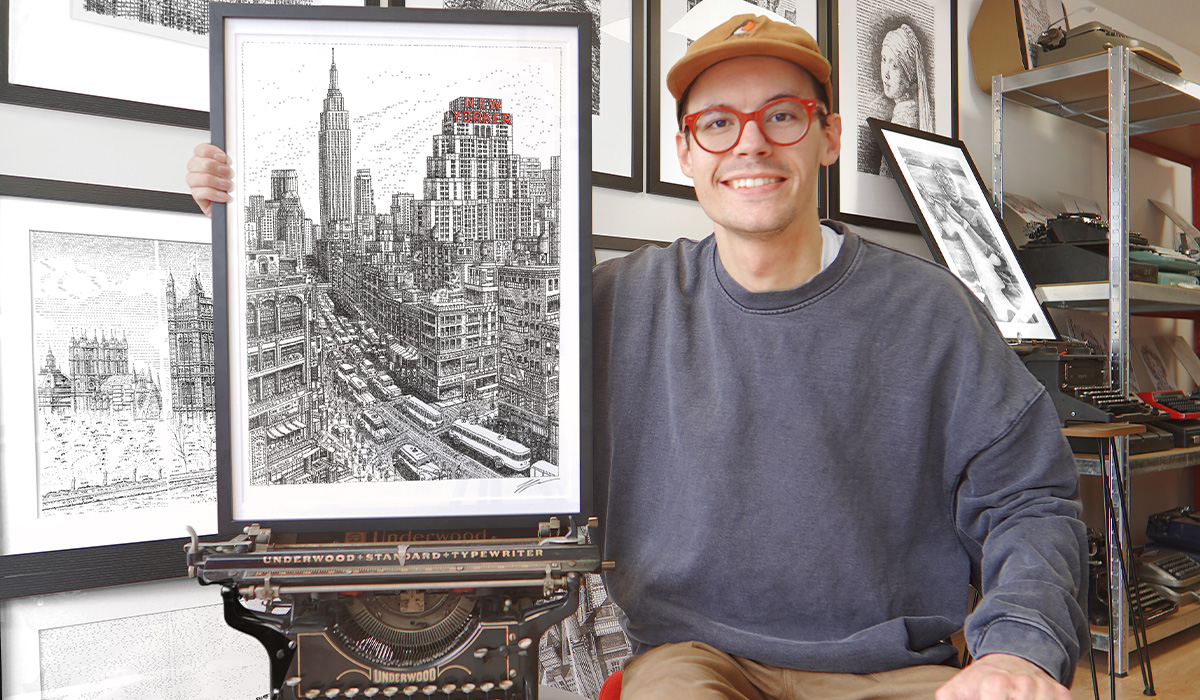
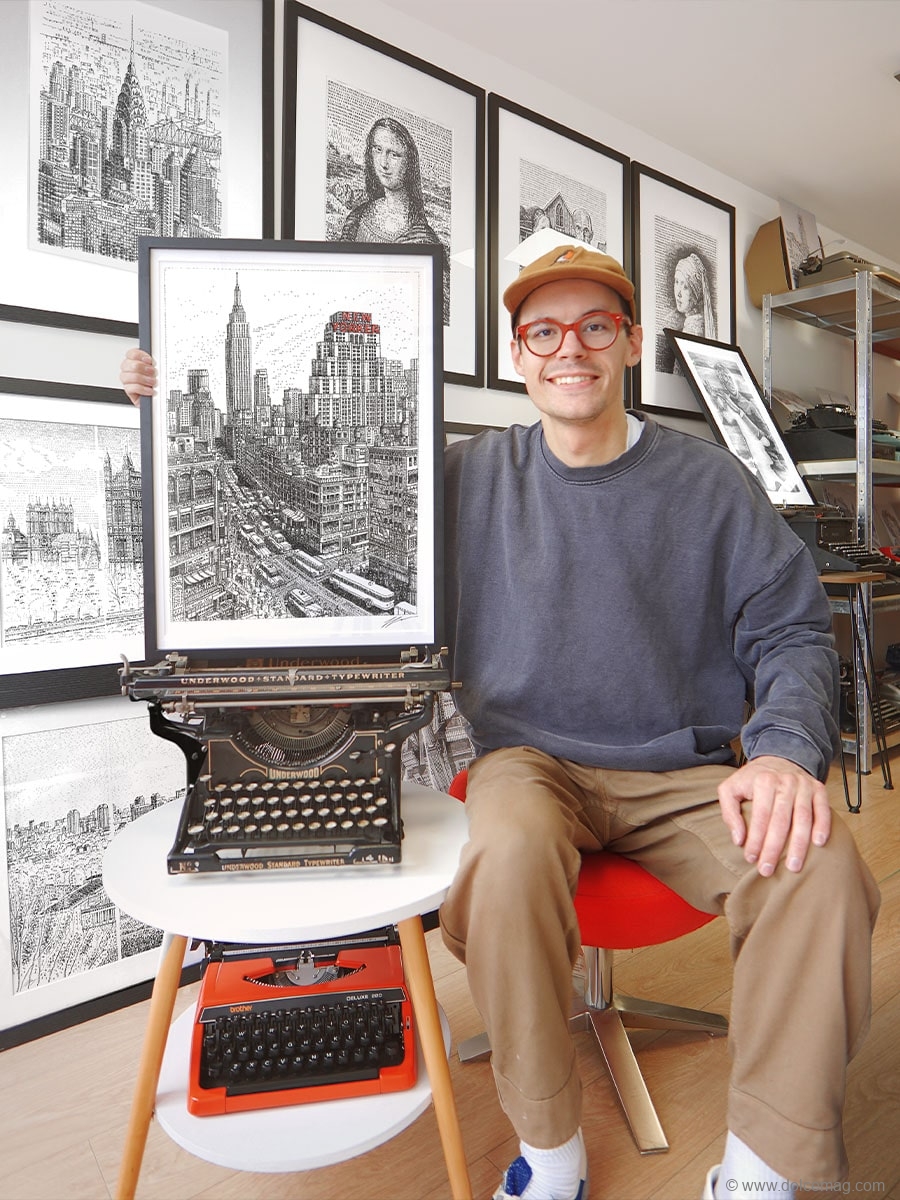
U.K. artist James Cook transforms typewritten characters into intricate worlds layered with hidden stories.
“I have always been fascinated with buildings,” says James Cook, his voice carrying the certainty of a lifelong passion. Having grown up in the U.K. just an hour from London, his earliest memories include visiting the city and returning home with his mind full of architectural lines. “Even when I was five, I probably did not know what an architect was, but I knew it involved drawing buildings.”
Art class became his sanctuary. While classmates took to the sports field, Cook stayed inside, sketching his way through the noise of adolescence. The bullying he endured made that creative space all the more vital. His dedication led him to architecture school at University College London, yet the profession proved far from what he had imagined.
The turning point came during a school project on artists who use technology, when Cook discovered the story of Paul Smith, an American artist with cerebral palsy whose parents gave him a typewriter to help him read and write. Unable to hold a pen, Smith began making art with keystrokes. “It was that story more than anything else that inspired me to give it a go,” Cook recalls.
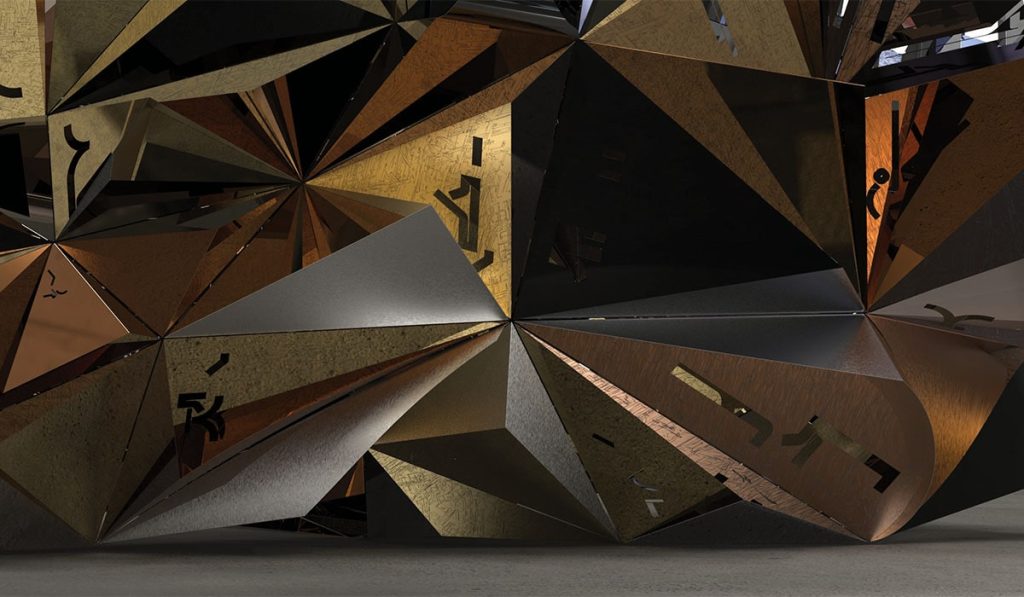
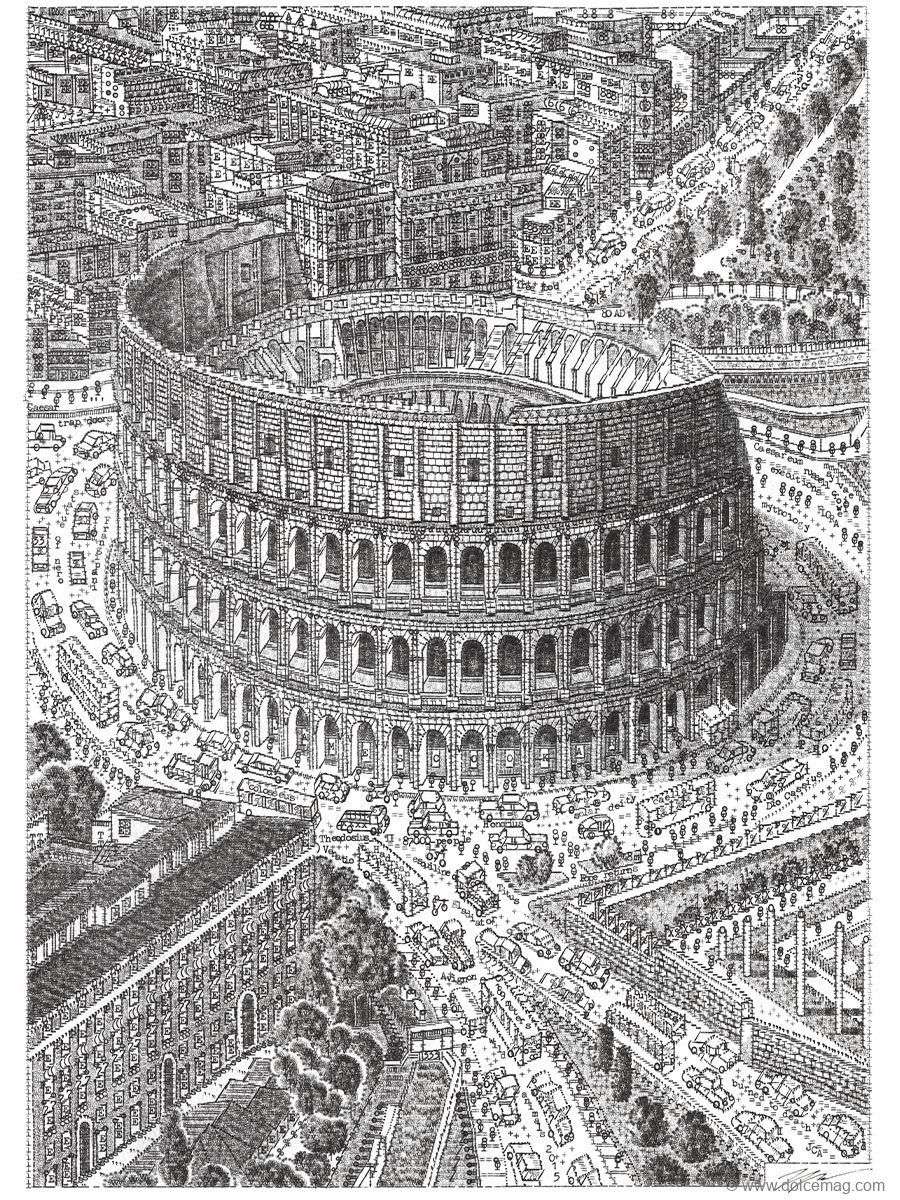
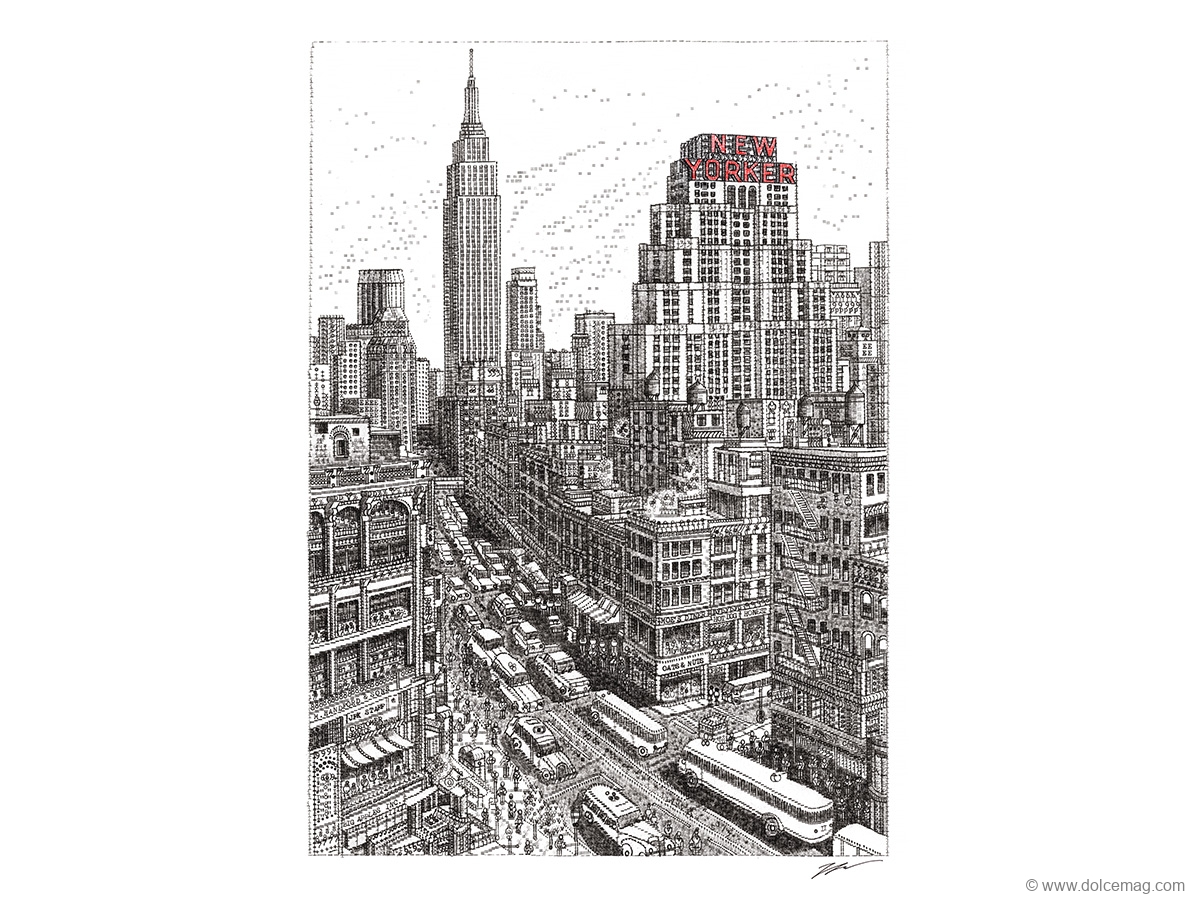
That first experiment grew into a practice that set him apart. With 44 typewriter keys he constructs cityscapes, portraits and landscapes by layering punctuation, letters and numbers into form. “I like the challenge of puzzle-piecing stuff together. Working with limitations can actually help creativity.”
His works hold more than meets the eye. Hidden in the patterns are personal references and playful secrets: pub names from his university days, clients’ names disguised within tower blocks, diary-like reflections woven into the architecture. “Somebody might just walk past and think these are pen-and-ink drawings. But when they stop and look closer, they find messages.”
The typewriters often arrive as gifts. In 2020, after a wave of media coverage, strangers began offering him machines with decades of history. “They would say, ‘It has been in my attic for 40 years. I know you will give it a second life.’” One machine with Arabic characters once belonged to a BBC journalist reporting from the Middle East.
In 2022, Cook moved his practice to Trinity Buoy Wharf, a converted shipping yard on the Thames. “Before that, I worked from home, which meant I never switched off. Here, I can have all my typewriters and projects laid out, lock the door at the end of the day, and leave it behind.”
Since relocating to this studio, he has also created works in remarkable locations, including from the stage of the Royal Albert Hall and the top of Battersea Power Station. His career has brought him into collaboration with celebrities who share his passion for typewriters, including British singer-songwriter Robbie Williams. For the most recent Mission Impossible film, Cook produced a typewriter portrait of the poster, presenting it on the red carpet.
The process has a rhythm of its own. A pianist as well as a visual artist, Cook compares the feel of typewriter keys to piano keys. “They have a weight to them. You develop muscle memory. Some machines feel like an extension of my hands.” For portraits in particular, precision is critical. “If you get the eyes right, you are more than halfway there.”
When asked what la dolce vita means to him, his answer is simple. “Being my own boss. Choosing projects I want to work on. I am not particularly materialistic — I already have everything I need. The sweet life is being invited to places most people never see and creating something that makes people stop, look closer and smile.”
INTERVIEW BY MARC CASTALDO